Why Casino Rooms Use Layers of Light
Why casino rooms use layers of light: learn to read table, ceiling, and pathway illumination and see how each zone shapes a venue’s atmosphere.
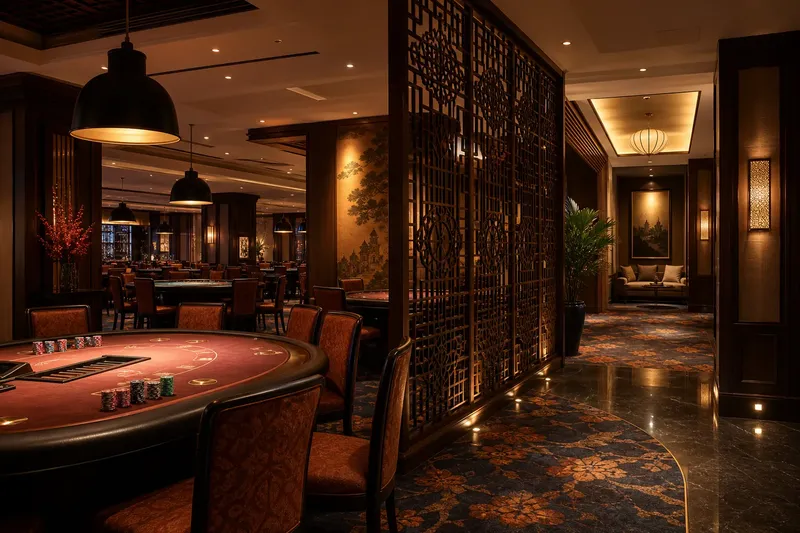
Why casino rooms use layers of light is easy to see when you step from a bright gaming floor into a quieter lounge. The change helps separate activities and gives the room a visual order. In Vietnam, lighting also meets a venue’s local setting, materials, and entertainment traditions; it is part of the atmosphere, not a signal about game outcomes.
Six Distinct Roles
These six lighting roles describe different jobs, even when a single fixture contributes to more than one. Look at what each source illuminates and how it affects movement, visibility, or mood.
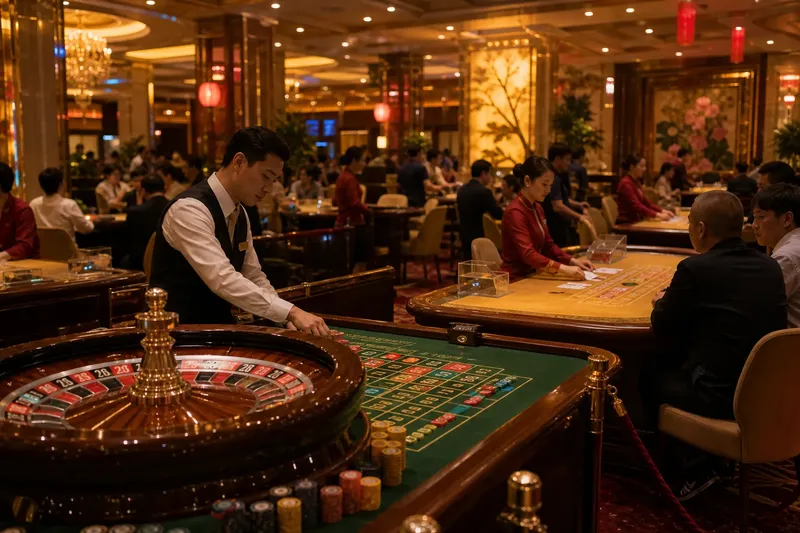
- Table lighting defines work surfaces. A pendant or aimed ceiling fixture can make cards, chips, and the tabletop stand out. The useful question is whether the surface looks clear without making nearby faces or paths hard to see. If the table is bright but its surroundings disappear, the room may need stronger background illumination.
- Ambient lighting makes the room readable. Recessed fixtures and light reflected off ceilings or walls provide a general glow across the floor. If furniture, entrances, and people remain visible beyond the table area, the ambient layer is doing its basic job; if not, the contrast may be too strong for easy orientation.
- Ceiling illumination sets the vertical scale. A softly lit ceiling can make a room feel more open, while a darker one keeps attention lower. In a Vietnamese venue, a ceiling might also frame lacquered panels, carved wood, or a pattern inspired by local craft. If those details are visible without glare, the lighting supports the architecture; if they vanish or shine harshly, the surface and fixture choices may be working against each other.
- Accent lighting highlights features. A wall wash, display light, or sconce can draw attention to a textured surface or a venue’s decorative motif. In a room with references to Vietnamese craft, a restrained wash can reveal pattern and material rather than flattening them with uniform brightness. If the feature is legible from the approach, the accent is clear; if it competes with the table lights, it may be too strong or too numerous.
- Path lighting supports movement. Low-level fixtures near a corridor, doorway, or change in floor surface can make a route easier to follow. This role is different from creating a calm edge: it is about seeing where to walk. If the route remains visible at a glance, the lighting is serving wayfinding; if a transition is easy to miss, a clearer light cue or sign may be needed.
- Color and dimming shape mood. Warm light can make wood and fabric appear softer; cooler light can give a surface a sharper feel. Dimmers can also let a lounge read differently from the main floor. If adjoining zones feel abruptly disconnected, adjust the color or intensity transition; if the shift feels coherent, the lighting helps distinguish their uses without relying on contrast alone.
Vietnamese Design Context
Casino interiors in Vietnam sit within a broader culture of hospitality and entertainment. The design language can draw on local materials and decorative references, but those choices depend on the venue; no single motif represents every region or establishment. Lighting affects whether such details read as part of the architecture or as decoration added on top.
For instance, a venue might use dark wood, patterned screens, or a lacquered feature wall. A narrow wall wash can reveal texture, while a broad, even glow may make a screen easier to read as a room divider. The practical choice depends on the feature’s job: highlight its surface, help separate areas, or keep the view through it open. Avoid treating a cultural reference as a lighting recipe; test the visual effect in context and keep routes and signs legible.
Questions About Light?
Why are some tables brighter than others?
Focused fixtures make a tabletop distinct within a larger room. The contrast directs the eye, but it does not indicate better odds or a preferred way to play.
Does dim lighting mean a room is private?
No. A dimmer area may feel quieter, but privacy depends on the layout, access, and venue policies. Check the actual boundaries rather than inferring them from light.
What should I notice in a Vietnamese casino interior?
Look at how lighting interacts with materials, screens, and decorative details, then notice whether signs and routes remain clear. The specific design references vary by venue, so read the space in front of you rather than assuming one national style.
How can I compare two rooms?
At each entrance, note the table light, general room glow, feature lighting, and visible walking routes. Comparing those functions gives you a clearer picture than judging brightness alone.
A Room-Reading Method
Use this quick checklist to distinguish the lighting roles. For each observation, follow the decision it points to:
- Table surface: If cards or objects are clear and nearby faces remain visible, the table and ambient layers are balanced; if faces fall into shadow, look for stronger background light rather than a brighter tabletop alone.
- General floor: If entrances and furniture are easy to identify from where you stand, ambient light supports orientation; if they blend into the background, note that the room’s contrast may make movement harder to read.
- Ceiling and finishes: If wood, lacquer, or patterned surfaces look clear without glare, the ceiling and accent choices suit those materials; if details disappear or reflect harshly, the treatment may be too dim or too direct.
- Decorative feature: If a screen or wall motif is visible without pulling attention from the room’s main activity, the accent is restrained; if it dominates, the feature lighting may be competing with the rest of the space.
- Walking route: If corridors and floor changes are easy to follow, path lighting is doing its job; if a route is unclear, rely on visible signs and staff guidance instead of guessing.
- Zone transition: If the shift from gaming floor to lounge feels clear but not abrupt, the color and dimming choices support different uses; if the change feels jarring, the transition may be stronger than the room needs.
Say you enter an invented casino lounge in Ho Chi Minh City with pendant-lit tables, a dark wood screen, and a corridor leading to quieter seats. First, you notice that the tabletops are clear but the corridor entrance blends into the darker wall. Next, you check whether the screen is meant to divide the lounge or serve as a feature; its open pattern suggests it separates areas while preserving a view. You then follow the visible signs rather than treating the dim corridor as a private entrance. Your resulting read is specific: table lighting defines the activity, the screen shapes the space, and the route needs a clearer cue to be easy to follow.
Why casino rooms use layers of light comes down to distinct functions: surfaces become readable, routes easier to recognize, architectural details more visible, and adjacent activities easier to distinguish. When you compare venues, focus on those jobs and on how Vietnamese materials or decorative references interact with the light. That gives you a grounded way to read the room without mistaking atmosphere for a playing cue.