A First Casino Visit as a Cultural Observer
A first casino visit in Vietnam can help you read a resort’s language, layout, and entertainment offer, with practical notes that keep observations precise.
Can you visit a casino in Vietnam without gambling and still understand something about its place in public life? A first casino visit in Vietnam can show how a resort presents gaming alongside hospitality, dining, and entertainment, while its language and architecture shape the visitor’s route.
Imagine Linh, an invented visitor, arriving at a resort with one hour before meeting a friend. She wants to see how the building connects its public spaces, not to draw conclusions about what Vietnamese people think about gambling. She checks the resort’s information, then plans a visit around its publicly accessible areas.
Resort setting
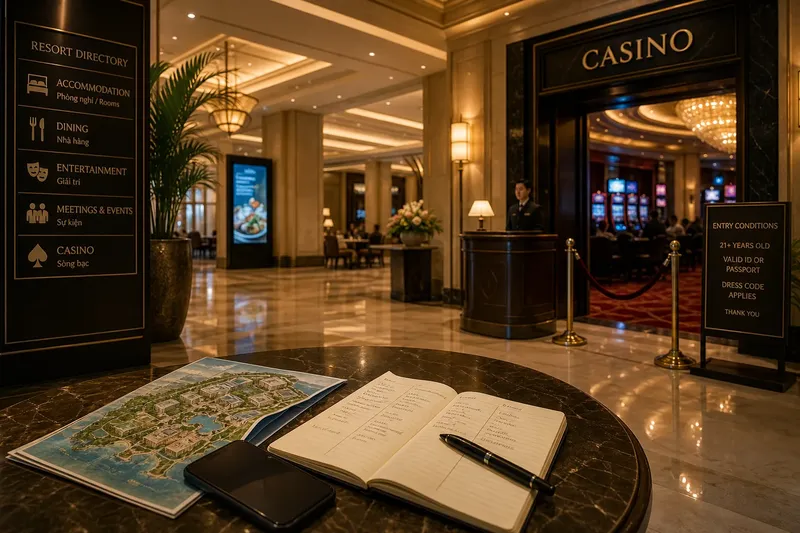
A casino in Vietnam may sit within a larger hotel or resort rather than occupy a separate building. That physical setting can frame gaming as one part of a leisure destination. A visitor might enter through a hotel lobby, pass restaurant or event directories, and then encounter a distinct casino entrance.
Notice the connections you can see. Is the casino reached from a shared lobby, a hotel corridor, or a dedicated entrance? Are dining and entertainment areas signposted before gaming appears? Describe the layout without assuming that connected spaces have the same access conditions.
Architectural transitions
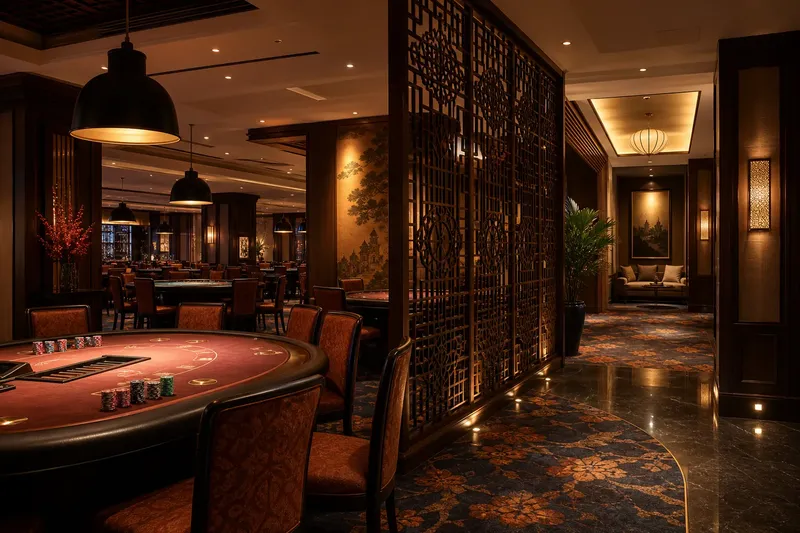
Pay attention to the moment the building’s character changes. A staffed desk, a doorway, a shift in lighting, or a different floor surface may separate general hospitality areas from gaming space. These details show how the venue organizes movement and signals a change in access.
Consider the sequence of spaces as a visitor encounters them: entrance, reception, amenities, and any controlled threshold. The arrangement can help explain how the casino fits into the resort experience. It cannot, on its own, establish the architect’s intent or the venue’s business strategy.
Keep your observations within areas open to you. If you are unsure whether a corridor or room is public, ask a staff member rather than entering to find out. That simple distinction protects both the accuracy of your notes and the privacy of people using the space.
Language on display
Look at the language used on directories, event boards, restaurant signs, and entry notices. Vietnamese and English may appear together, and a particular venue may use other languages as well. Record only wording you can read clearly; one sign is evidence about that sign, not about language use across Vietnam.
Notice how the signs group the resort’s offerings. A directory may list accommodation, dining, entertainment, and gaming as separate destinations. An entry notice may explain who can proceed. Public-facing language gives visitors a map of the venue’s services and boundaries, even if it does not explain why those choices were made.
Entertainment beyond gaming
Resorts may advertise restaurants, lounges, performances, meeting spaces, or other activities alongside casino facilities. Check what the venue itself lists, then distinguish that public program from anything you cannot see inside a gaming area.
Look at how the entertainment spaces connect. A restaurant may open onto a shared lobby, while a performance room may have a separate entrance and directory listing. The route reveals how the property places leisure options in relation to one another, but it does not tell you how every visitor uses them.
Sound can offer a limited clue to the atmosphere of a public area. From a place where you are welcome to pause, note whether you hear music or an announcement nearby. Describe where the sound came from as best you can; do not record conversations or guess what people feel.
Questions visitors ask?
Can I visit without gambling?
Access varies by venue, and some areas may require credentials even if a hotel or restaurant is open to visitors. Check the specific property’s current visitor information before you go.
What can the architecture tell me?
You can describe visible links among the hotel, dining, entertainment, and gaming spaces, plus the thresholds between them. One building cannot represent every casino in Vietnam.
Can I take photographs or record sound?
Venue rules may restrict photography or recording, particularly near gaming areas. Follow posted instructions and ask staff if the policy is unclear; written notes can preserve your observations without capturing other people.
How should I describe what I see?
Separate direct observation from interpretation. Write down the location and visible detail, then mark any explanation as a question unless the venue clearly states it.
A worked visit
Say Linh’s invented plan starts with one hour before dinner, a resort directory she can consult at reception, and no credentials for the casino entrance. She asks whether the hotel lobby and restaurant corridor are open to visitors, then follows the public signs.
She notes three things: the restaurant corridor branches from the lobby, the directory lists dining and entertainment apart from gaming, and a staffed desk marks the casino entrance. She hears an announcement in the lobby but does not record it. Her account can now state that this resort connects public dining to the hotel lobby while marking gaming as controlled access. The tradeoff is clear: she can describe the public layout, but she has no basis for describing the casino interior or how its guests experience it.
Field-note decisions
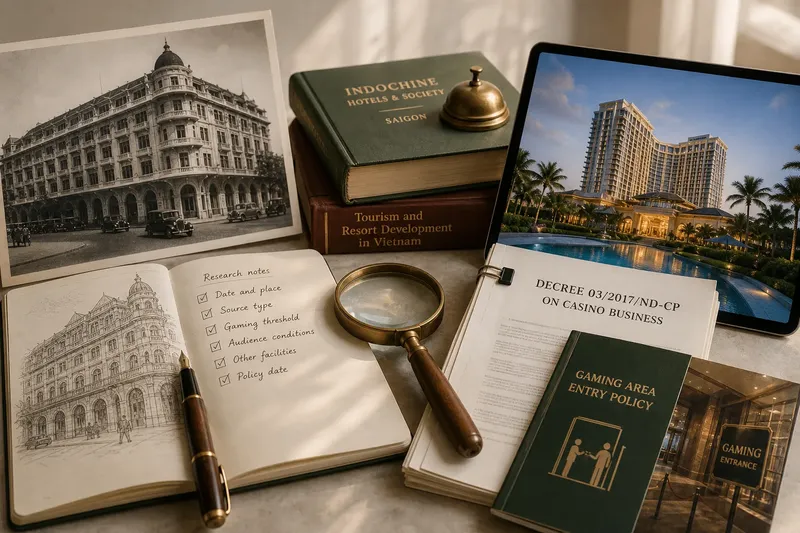
Use a simple note page with three columns: observation, source, and next decision. The following checks help keep a visit focused on what a venue makes visible.
- Check whether the casino connects to a hotel or resort. If a shared route is visible, describe that connection; if it is not, record the separate entrance instead.
- Check the venue’s visitor information for admission conditions. If the information clearly covers your visit, follow it; if a point is unclear, ask the venue before going.
- Check where a public route meets controlled access. If a boundary is marked, stay on the public side; if its scope is uncertain, ask staff or turn back.
- Check the languages on directories and notices. If the wording is legible, copy it accurately; if it is not, mark it unreadable rather than guessing.
- Check which non-gaming services the venue lists. If dining or entertainment is listed, describe it as a public offering; if it is not listed, do not infer that it is available.
- Check the venue’s photography and recording rules. If recording is prohibited or the policy is unclear, keep written notes; if it is permitted, still avoid capturing guests or private conversations.
- Check whether a note could identify a guest or employee. If it includes a name, face, or personal detail, remove it; if it describes only a public feature, keep the observation.
A first casino visit in Vietnam is most informative when it stays close to visible details: the resort setting, architectural transitions, public language, and advertised entertainment. Compare notes from different venues before making broader claims, and consult qualified sources for historical or regulatory context. That distinction lets you describe a place accurately without treating one building as a portrait of a country.